Rich Mix was envisioned as an arts centre by Tower Hamlets council in 1999. Based in Bethnal Green, the purpose was to celebrate migrant communities in London. It was incorporated in 2001 with a group of Labour politicians at the helm. The then MP for Bethnal Green, Oona King, and Tower Hamlets veteran councillors and future leaders, Michael Keith and Denise Jones, were appointed trustees in 2002.
The centre was personally launched by Ken Livingstone at an inaugural ceremony in the same year. Mr Livingstone was then the mayor of London and Rich Mix was one of his four flagship cultural projects.
It cost £26m, according to council calculations in 2006. Funding was received from a range of private and public bodies, including the Arts Council England, the Millennium Commission, the London Development Agency, and the council itself. The council valued its total investment in Rich Mix at £3.6m in 2010.
The £850,000
The centre was beset with financial troubles early on.
The first hit came in 2003 when cost overruns led the council to invest further. Rich Mix’s ‘business model failed almost immediately’ (p31,32/108), according to a council report, which described the charity’s early years as a struggle to survive.
A £1.75m loan was agreed. According to the contract (p8/8), £900,000 was to be repaid upon the centre’s practical completion and the remaining £850,000 in 2006.
Rich Mix repaid the £900,000 in 2005 (p16/19). But when the £850,000 became due in July 2006, the charity did not repay the council claiming the sum was a grant not a loan.
At the time, Denise Jones was leading the council, having been promoted from the position of deputy leader in May. She replaced Michael Keith who had served as leader for one year. Both were still board members at Rich Mix.
Rich Mix noted that although it had used the £850,000, it had not agreed the terms of its use with the council first (p16/16). Its financial report ending in 2005 said: ‘The London Borough of Tower Hamlets believe that The Rich Mix Cultural Foundation owe them a further £850,000. However, the foundation is disputing this amounts as it believes that it was not authorised or formally agreed and has therefore not recognise it in these accounts.’
The matter was left unresolved.
The £1.5m
In 2010, Rich Mix was experiencing financial difficulties again. The new chief executive, Jane Earl, approached the council for another cash injection (p7/23).
The council’s strategic development committee (SDC) met in August to consider the problem. Members acknowledged that the charity still hadn’t repaid the £850,000 (p10/31), but agreed to set aside another £2m for Rich Mix anyway. The £2m was from a s106 agreement (money given by developers to local authorities to be used for social and community projects).
It is not clear why the council decided to award the entire fund to the one charity that was already indebted to it, refused to acknowledge the debt, and had a history of financial trouble.
In fact only a few months before this meeting in March, another meeting had discussed giving (p11/11) £350,000 of the £2m to the Bancroft Library which was in need of refurbishment.
But the library never received any of this money, as reported in a local newspaper and confirmed by the council in an FOI: ‘No payments were made to Bancroft History Library and Archive under the S106 agreement for 32-42 Bethnal Green Road.’ The decision concerning the library is also not mentioned in the minutes from the SDC’s meeting in August 2010.
The charity noted how important this money was for its future stability (p6/18) in its annual report for 2011/2012. Denise Jones – still a Rich Mix board member and vital supporter of the project – was no longer council leader but now served as the council’s lead member for culture.
Of the £2m, £500,000 was given to Rich Mix over the course of 2011/2012 in return for Rich Mix agreeing to meet certain performance targets. The remaining £1.5m was conditional on further targets being agreed. But the contract was left incomplete and these targets were never set (p2,13/13).
Enter Lutfur Rahman
A few months later in October 2010, there was a new council leader. Lutfur Rahman, formerly Labour but now Independent, had a very different approach to Rich Mix – he refused to make any further payments from the £1.5m until the charity could prove it would deliver added value in terms of performance outputs.
In June 2012, mayor Rahman also issued a loan claim in the High Court to recover the £850,000 from Rich Mix, which it had yet to repay. Rich Mix offered to settle matter out-of-court by repaying the sum over a period of time, which would save it from insolvency, but the mayor refused to accept.
In spite of its offer, Rich Mix still denied that the money was meant to be a loan and responded with a counterclaim for the £1.5m. The charity’s current chair, Michael Keith, has since said Lutfur Rahman chose to resurrect the £850,000 debt six years later merely ‘for political reasons’.
Representing Rich Mix, Latham & Watkins wrote to the council (p8/108): ‘In almost three years of litigation, the council did not produce any signed document containing any obligation for Rich Mix to pay any money to the the London Borough of Tower Hamlets.
‘There are strong reasons to believe that no such obligation ever existed and that, even if such an obligation ever did exist, events occurring in the meantime have either waived such obligation or rendered it unenforceable.’
Rich Mix responds
Rich Mix did not repay the £850,000 because although the council wanted it to be a loan, the charity did not accept it as one, according to Michael Keith.
Mr Keith is the present chair of Rich Mix and has been with the charity since the very beginning after being appointed as a trustee in 2002. He said: ‘What was ambiguous and disputed was whether or not the money that the council had written down as intending to be a loan had ever been accepted as one [by Rich Mix]. Tower Hamlets thought it would be a loan but it was long considered by all parties that it was never going to be a loan.’
For some reason, neither the council nor the charity sought to clarify the confusion before all this taxpayers money was used.
Mr Keith also said Rich Mix was not responsible for repaying the £850,000 because the money was given to a management body and not the charity itself. He said: ‘At the time it was created as a loan, [Rich Mix didn’t have] a full structure in place. You can’t have a loan with something that doesn’t exist in its full form.’
Mr Keith explained that the Rich Mix project was initially managed by the council, then it was handed over to the now defunct Cityside Regeneration company, before finally becoming an independent entity in December 2006. He said in 2004 the money was not given to Rich Mix but to Cityside.
‘The arrangements were re-written and it was a very complicated picture. It was Cityside that took the money. The terms on which they took the money, the records are long gone, that’s why there is room for a disputed interpretation.’
But in 2004 Rich Mix had been incorporated for three years i.e. it existed as a legal entity with a board. What is more, the contract for the sum clearly named Rich Mix as the grantee.
But most important is the fact that the £850,000 was not a singular transaction – it was part of a larger, £1.75m loan package of which £900,000 was accepted and repaid like one in 2005. Rich Mix therefore accepted half the contract as a loan, but not the other half.
The full contents of this contract were never reported. Nor was it mentioned by the charity in all its demonstrations to the public in 2015, to galvanise public support to save it from insolvency.
So in 2004 Rich Mix – then chaired by the local MP Oona King – used £1.75m of public money without first confirming the terms of use. And when the time came to repay £850,000 of that sum, relied on the confusion to claim the money was never meant to be a loan.
This can be read in conjunction with the Charity Commission’s guidance for trustees who are told to ‘monitor grant and funding arrangements against the the terms of that funding’. And also that they must be able to demonstrate that funds have been used for the ‘purposes for which they were intended’.
Rich Mix was unable to put me in touch with Oona King, despite several requests.
The High Court
The case to resolve this dispute was scheduled for a three-day hearing in July 2015.
But before that, a preliminary hearing in July 2014 was to determine whether Rich Mix had a claim to the £1.5m under the contract drawn up in 2010. Rich Mix argued the contract was a binding agreement and that the council was legally obliged to pay all of the £1.5m to the charity. But this argument was rejected.
The Master dismissed Rich Mix’s claim to the money and explained that the contract was ‘unenforceable’ (p2,6,7/8) because performance targets – upon which the contract was conditional – were never agreed.
Michael Keith has since said Rich Mix tried several times in 2012 to agree targets with mayor Rahman’s administration but ‘they just would not reply for months on end’. However, the contract clearly states that the targets were supposed to have been agreed within eight weeks of September 2010.
After the charity’s legal claim failed, it attempted to secure the money by another route. Rich Mix told the council that the s106 money could not be used for any other purpose except to be advanced to the charity. And Michael Keith has argued that the committee’s meeting in 2010 was a ‘guarantee’ that it would give Rich Mix the money. But council officers – who noted that the charity never pursued this argument in court – dismissed this claim explaining s106 money is not specific to any one organisation.
The Government intervenes
In November 2014, the dispute between Tower Hamlets and Rich Mix took a backseat. The then communities secretary Eric Pickles decided to launch a Government intervention at the council.
Two commissioners were appointed to take over key functions after a critical report found mayor Rahman’s administration had failed to comply with its best value duty. This included a lack of transparency in grant-making, irregular property transactions, contractual arrangements and spending on publicity.
The overarching purpose was to ensure the council’s financial decisions complied with its best value duty.
Specifically, commissioners were to be responsible for all grant making, and to be consulted in matters of property transactions, the appointment of statutory officers, the selection or deselection of the electoral registration officer and returning officer, and the council’s publicity plans.
In April 2015, Lutfur Rahman was removed from office entirely after the High Court ruled (p196,197/198) he was guilty of ‘corrupt’ and ‘illegal’ practices in the May 2014 local election.
John Biggs is elected
When John Biggs replaced Lutfur Rahman as mayor on 12 June 2015, the future of Rich Mix was hanging in the balance. It had failed to secure the £1.5m and was up against a council confident that it would win the £850,000 debt claim, which would have forced the charity into insolvency.
Within one week of his election mayor Biggs discontinued the litigation and agreed to settle the dispute out-of-court. Ignoring the court’s decision, he decided to give Rich Mix the £1.5m anyway and have it repay the council the £850,000.
In his written explanation, mayor Biggs said: ‘I note that the release of s106 funds to Rich Mix, which in my view was intended to happen long ago, will enable Rich Mix to repay the £850,000 owed to the council.’
When asked over the phone why he insisted the council owed Rich Mix the £1.5m when the court had rejected this assertion, the mayor forwarded a generic statement that did not address the issue.
It said: ‘As part of the resolution, Rich Mix has received s.106 monies agreed by the LBTH strategic development committee in August 2010 and has, in turn, agreed to repay the £850,000 loan given by LBTH to Rich Mix in 2003 and make a payment in respect of certain external costs.
‘The decision was also considered as part of the more general Clear Up work when the allegation of improper decision making was rejected.’
So mayor Biggs gave Rich Mix the money because of an ‘agreement’ – an agreement which resulted in an unenforceable contract and which was ruled out as legally binding by council officers. In effect awarding Rich Mix £1.5m on the basis of a verbal agreement, not supported by a duly completed, enforceable contract.
The mayor’s decision is ‘called in’
Mayor Biggs gave Rich Mix the money without there being any legal obligation to do so, and also without first consulting a business plan or setting performance targets.
In July 2015, his hasty decision was challenged by five opposition councillors over its lack of transparency. The council’s overview and scrutiny committee told the mayor to reconsider his decision and this time to look at a business plan and consider setting targets (p4/6). He was also asked to explain how his decision complied with the council’s best value duty.
But even when given the opportunity to remedy the unenforceable contract for the £1.5m and set targets, mayor Biggs chose not to. He said he did not wish to prevent Rich Mix from using the money as it wanted to.
He published a written explanation: ‘I do not wish to set fund raising targets in such a challenging economic environment or to fetter the organisation’s ability to apply the additional net resource resulting from this settlement as it sees fit in order to reduce its capital liabilities… I do not consider it appropriate in this case to set performance output targets.’
He did, however, suggest some general areas to which the money was to be applied (p3/8).
Mayor Biggs’ main reason for striking this settlement was that Rich Mix was a valuable asset to the borough and that there was too much public investment in the charity to allow it to go insolvent. But instead of following up on Rich Mix’s original offer of repaying the £850,000 in instalments, he chose to give away £1.5m which could have used for some other purpose.
He also eventually consulted a business plan but didn’t mention that this was only done one month after he originally made his decision, as this letter from Rich Mix illustrates .
Denise Jones was a member of this committee, as well as a Rich Mix trustee, and her presence at the meeting about the charity was submitted as a complaint to the Clear-Up team, mentioned above. The team consisted of one commissioner and three council officers.
At the time there was also concern that the £1.5m was being advanced to a charity whose chair, Michael Keith, was from mayor Biggs’ own political party.
But the report rejected the allegation that the mayor’s award to a charity run by members of his own political party represented a conflict of interest. It said: ‘No conflict of interests arises purely by virtue of the fact that a member of the same political party of someone else with a connection to an organisation is involved in the decision making.’
Council officers warning
Mayor Biggs’ legal settlement with Rich Mix failed to comply with a best value duty test.
This was the advice given to the lead commissioner Sir Ken Knight by the council’s service head for communities and culture, Robin Beattie, a few days after mayor Biggs’ election. She said determining best value in this case was complicated but (p67/108):
‘The financial position of the Rich Mix is such that an output driven approach to establishing a best value argument for further investment has been attempted but failed as they simply cannot deliver additional outputs to the value of the investment established by their settlement offer.’
But Sir Ken chose not to intervene explaining that because this was a legal settlement and not a grant it was beyond the remit of his directions from the Government.
The long history of the £1.5m can be summarised thus: grant money was awarded in a contract, which failed, and was then awarded in an out-of-court settlement, which did not need to be approved as either a grant or contract.
Greg Clark
Four months after the dust had settled on the Rich Mix fiasco, there was no sign that the then communities secretary Greg Clark was aware of what had happened on his watch.
He wrote to mayor Biggs in October 2015: ‘I am pleased with the progress that has been made in Tower Hamlets over the last six months, which will help restore the community’s confidence in how their area is being run.
‘It means I am confident that John Biggs can now be left to take on the day-to-day running of the borough as the mayor.’
The select committee inquiry
One year on, in July 2016, the communities select committee called upon mayor Biggs and Sir Ken. They gave evidence as part of the committee’s inquiry into the Government interventions in Tower Hamlets and Rotherham.
A year after awarding £1.5m to a charity without first consulting a business plan or setting targets and ignoring the High Court and his own officers, mayor Biggs told the committee his council was an example of transparency.
He said: ‘Over recent months the council has become more transparent… Decision making is more open, scrutiny has been enhanced and expanded, including in relation to grants and housing matters.’
He also said he was a ‘reasonably reputable fellow who could be trusted to get on with stuff’. He was disappointed that his ‘existence was not seen as evidence’ that the council had changed.
Sir Ken seemed to agree: ‘Only since the election of mayor John Biggs and the three newly appointed statutory officers has it been possible for the council to make progress.’
From Sir Ken’s evidence, the committee concluded that ‘things have now changed’ at Tower Hamlets, ‘including more open and transparent decision making.’
End of the intervention
In March 2017, the then communities secretary Sajid Javid declared the intervention a success.
He said the ‘corruption and financial mismanagement’ at the council had now been resolved thanks to the Government’s intervention.
Upon the return of powers to the council, mayor Biggs praised his administration, claiming he had completely transformed Tower Hamlets.
He said: ‘Over the past 21 months the council has undergone a complete transformation. Under the previous mayor this was a council drowning in crisis, corruption and controversy. Since then we have bought in new leadership, opened up the decision making process and challenged historic wrongdoing and bad practice.’
Responses from the Government and committee
I contacted the select committee in July 2017 to tell them the evidence given by Sir Ken and mayor Biggs, and the committee’s conclusion that the council was now operating transparently, contradicted at least one major financial decision made by the new administration.
The committee got back to me in October after considering all the evidence to say that the chair, Clive Betts (MP for Sheffield South East), had decided not to pursue the issue further. Instead, the committee forwarded all the evidence to Sajid Javid.
In January 2018, the Ministry of Housing responded that the Rich Mix settlement was not the Government’s responsibility. Because it was a legal settlement and not a grant, it was beyond the remit of the intervention.
The response is puzzling considering the sole purpose of the intervention was to ensure the council’s financial decisions complied with its best value duty. And, as council officers noted, mayor Biggs’ decision failed to do this on at least one count.
A spokesman for the Ministry said: ‘This payment is a matter for the council and you should speak to them about it.
‘We appointed an independent commissioner to look into the council. However, this payment did not fall within their remit and it is the responsibility of the council.’
This wasn’t the first time the Government refused to look into this matter. Earlier, in April 2017, the Government’s deputy director for local government intervention, Alex Powell, provided the same response. Because this was a legal settlement and not a grant, the Government wasn’t going to get involved.
I shared the same evidence with the Liberal Democrats ahead of the local elections in April this year. In response, London Assembly member Caroline Pidgeon and local government spokesperson Wera Hobhouse called out the lack of transparency in the council’s financial transactions with Rich Mix:
‘The more one examines the decisions made by Tower Hamlets council, it is very clear that serious mistakes have continually been made for over a decade.
‘Due to a lack of transparency over the allocation of public money totally unnecessary legal disputes have been created, at a huge cost to the taxpayer.
‘It is simply breath taking that a dispute should even arise, let alone not be resolved, over whether the council has allocated a grant or a loan.
‘Tower Hamlets has a very long way to go in becoming an open and accountable council that is able to allocate public money to the maximum benefit of its residents.’
When John Biggs was elected mayor in 2015, he pledged to make the council more transparent. But within one week, he decided to give Rich Mix £1.5m despite there being no legal obligation to do so and council officers’ conclusion that the transaction failed to comply with best value considerations.
When the Government intervened at the council, the aim was to end financial mismanagement. But when asked to investigate the Rich Mix decision, it chose not to.
What was the point of the intervention?
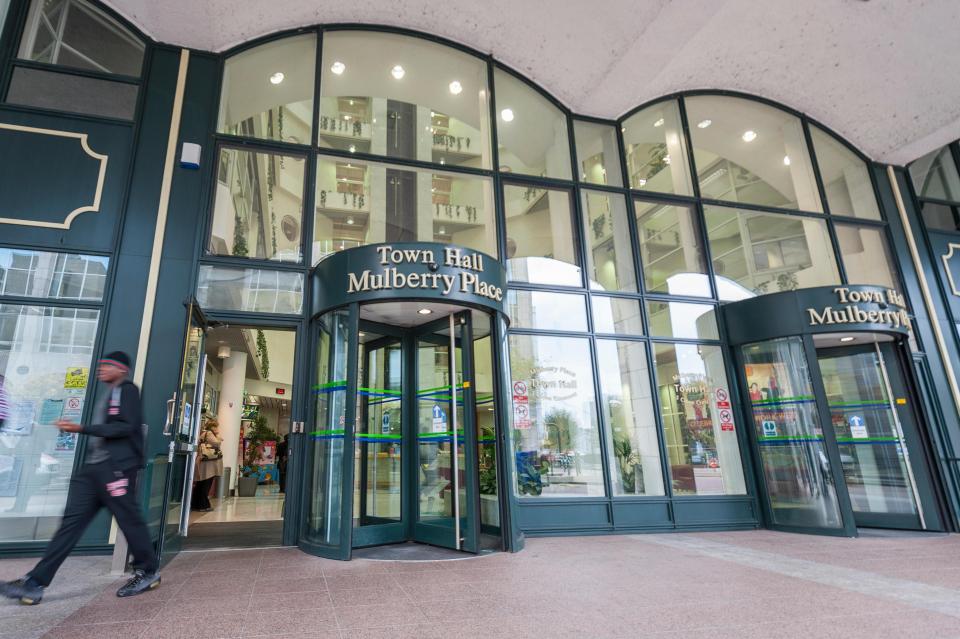
Picture: Lee Thomas/Alamy
 Tower Hamlets council and The Rich Mix Cultural Foundation